
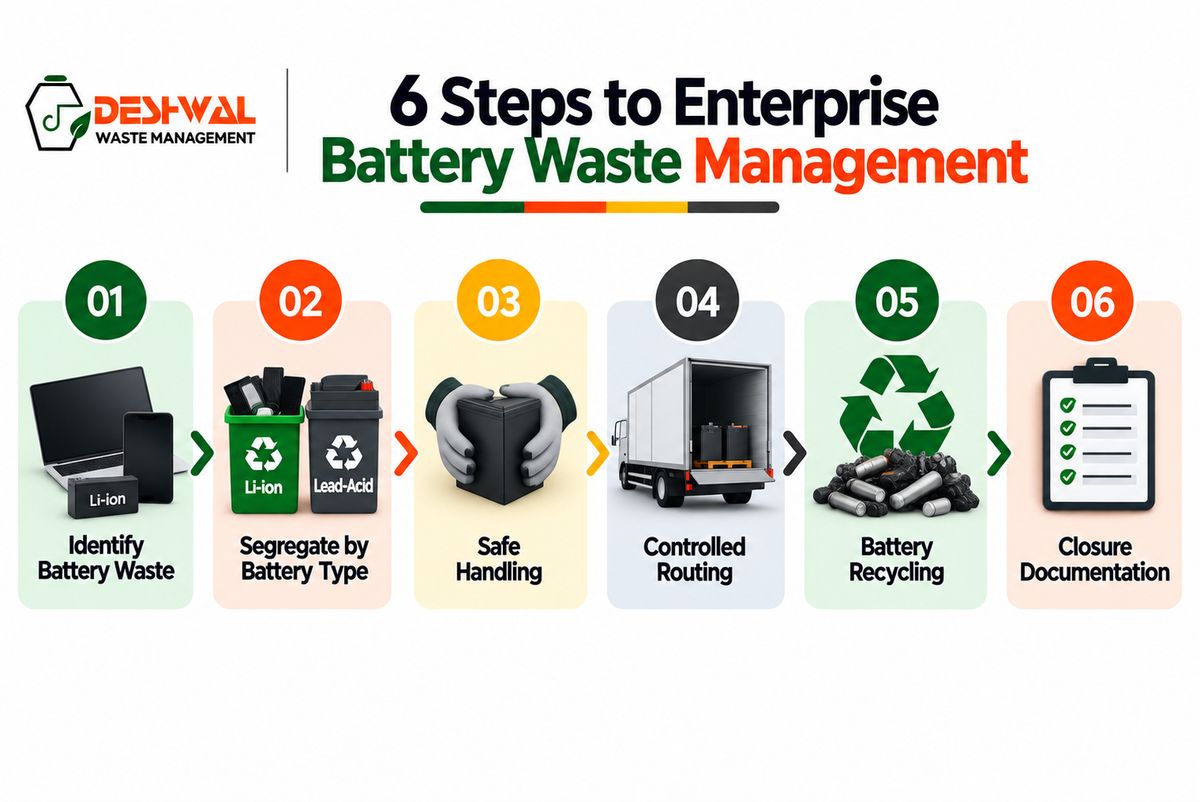
Battery waste management in India involves the careful identification, segregation, handling, routing, recycling and documentation of used batteries, including lithium-ion and lead-acid battery waste. For enterprises, battery waste often appears during IT asset disposal, office dismantling, UPS replacement, e-waste recycling and data-centre decommissioning projects.
What battery waste management means for enterprises
Battery waste management is the process of handling used, damaged, end-of-life or discarded batteries through a controlled route.
For enterprises, battery waste is not limited to one department. It can come from IT, facilities, operations, warehouses, data centres, office closures, branch exits, UPS replacement projects and device refresh cycles.
This may include lithium-ion batteries from laptops, mobile devices, handheld equipment and backup devices. It may also include lead-acid battery waste from UPS systems, backup power units and other power-support infrastructure.
Battery waste management becomes especially important when it appears inside a wider e-waste management or IT asset disposal project.
For example, an office closure may include laptops, monitors, servers, cables, access devices, UPS units and battery waste. A data-centre decommissioning project may include servers, racks, storage systems, networking equipment, UPS systems and large quantities of backup battery waste. A normal IT refresh may include laptops and devices with embedded or removable lithium-ion batteries.
In each case, the enterprise needs to know what type of battery waste is present, where it came from, how it was handled, whether it was separated from other electronic waste, and what records exist after closure.
Battery waste management is therefore not only about removal.
It is about controlled handling, responsible routing and documentation.
Why battery waste cannot be treated as ordinary scrap
Battery waste should not be treated like ordinary scrap because it can carry safety, handling, storage, recycling and documentation risks.
A battery is not just a piece of recoverable material. It may contain chemicals, metals and stored energy. If damaged, mixed, stored poorly or moved without care, battery waste can create operational and safety concerns.
This is especially important for enterprises that generate battery waste in bulk.
A few laptop batteries from a small office may be manageable. But a large IT refresh, UPS replacement, branch closure or data-centre decommissioning project can create a mixed stream of lithium-ion batteries, lead-acid battery waste, cables, electronic equipment and other IT assets.
If these are treated as one scrap lot, the enterprise may lose visibility over how the batteries were handled and where they finally went.
Battery waste should also be separated from general office waste and ordinary e-waste where relevant. A retired laptop, a UPS battery and a cable bundle should not be treated as the same category.
This is why enterprises should plan battery waste handling within the larger asset-retirement process.
The goal is not only to remove old batteries from the premises.
The goal is to ensure that battery waste is identified, routed and documented properly.
Common sources of battery waste in enterprises
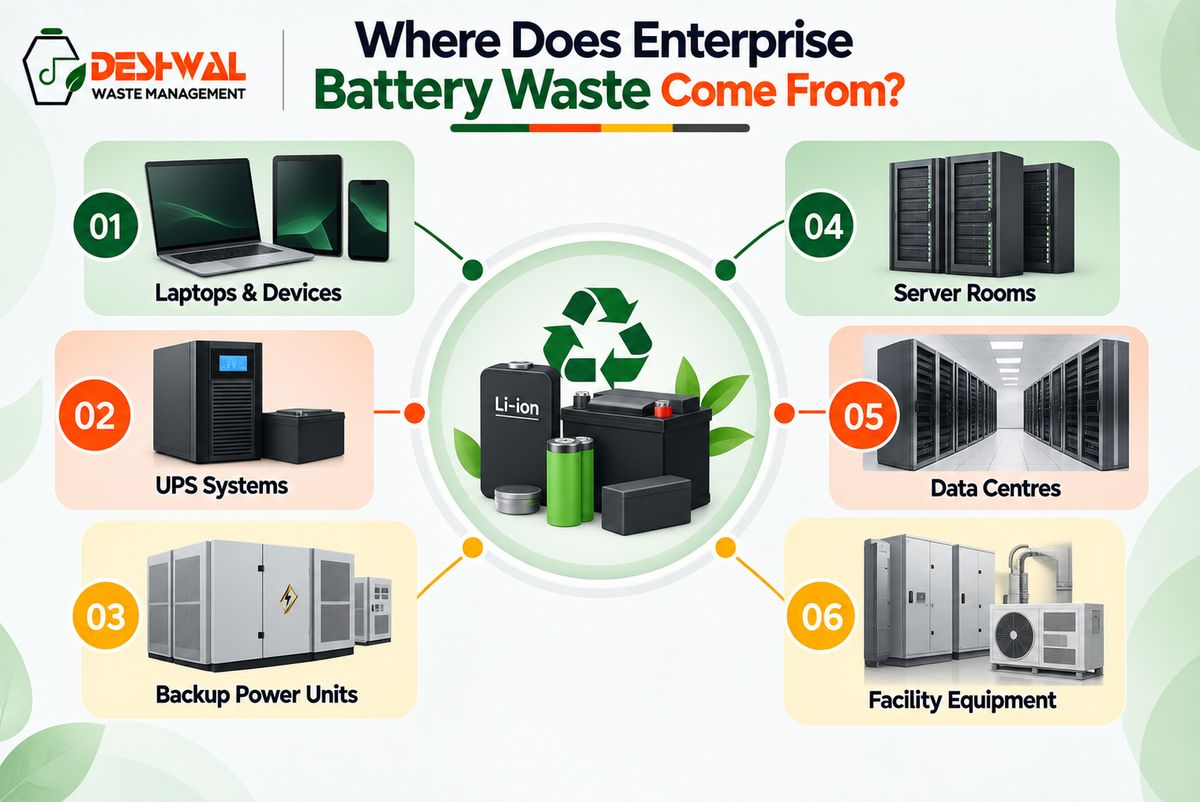
Enterprise battery waste can come from multiple locations and asset categories. It may appear during routine replacement, office clearance, IT asset disposal, office and IT-infrastructure dismantling or data-centre decommissioning.
Laptop and device batteries
Lithium-ion battery waste is commonly associated with laptops, tablets, mobile devices, handheld devices, backup devices and other portable electronics.
In many enterprises, these batteries are not always removed separately at the start. They may be embedded in devices, attached to old laptops, mixed with accessories or discovered during grading and dismantling.
This is why battery identification should be connected with ITAD, device recovery and recycling decisions.
A laptop may have recovery value, but the battery condition may affect its next route. A swollen or damaged battery may need different handling from a working device battery. A device that cannot be repaired or recovered may move into recycling, while its battery stream may need separate documentation.
UPS systems and backup power units
Lead-acid battery waste is often associated with UPS systems, backup power units and facility power-support infrastructure.
These batteries may appear during office moves, UPS replacement, server room changes, facility shutdowns or data-centre decommissioning projects.
UPS battery disposal should not be left as a last-minute facilities task. It should be included in the project scope because it can affect site clearance, reverse logistics, documentation and final closure.
For enterprises managing large UPS or backup power installations, battery waste records may become important for internal review, ESG reporting inputs or EPR-related documentation where applicable.
IT infrastructure and facility equipment
Battery waste can also come from access-control devices, telecom equipment, emergency systems, power backup units, network rooms, labs and facility infrastructure.
These sources are easy to miss because they are not always listed in the main IT asset inventory.
During an infrastructure dismantling project, the enterprise should identify whether any equipment includes embedded, removable or associated batteries.
This helps avoid mixed waste movement and improves the quality of closure reporting.
Lithium-ion battery waste vs lead-acid battery waste
Lithium-ion and lead-acid batteries are both common in enterprise environments, but they should not be treated as the same waste stream.
Lithium-ion batteries are often found in laptops, portable devices, mobile devices, handheld equipment and certain backup systems. They are lightweight, energy-dense and commonly embedded in electronic products.
Lead-acid batteries are commonly found in UPS systems, backup power units and power-support infrastructure. They are heavier and often appear in larger quantities during UPS replacement, server room shutdowns or data-centre decommissioning projects
g projects.
For enterprises, the practical difference is important.
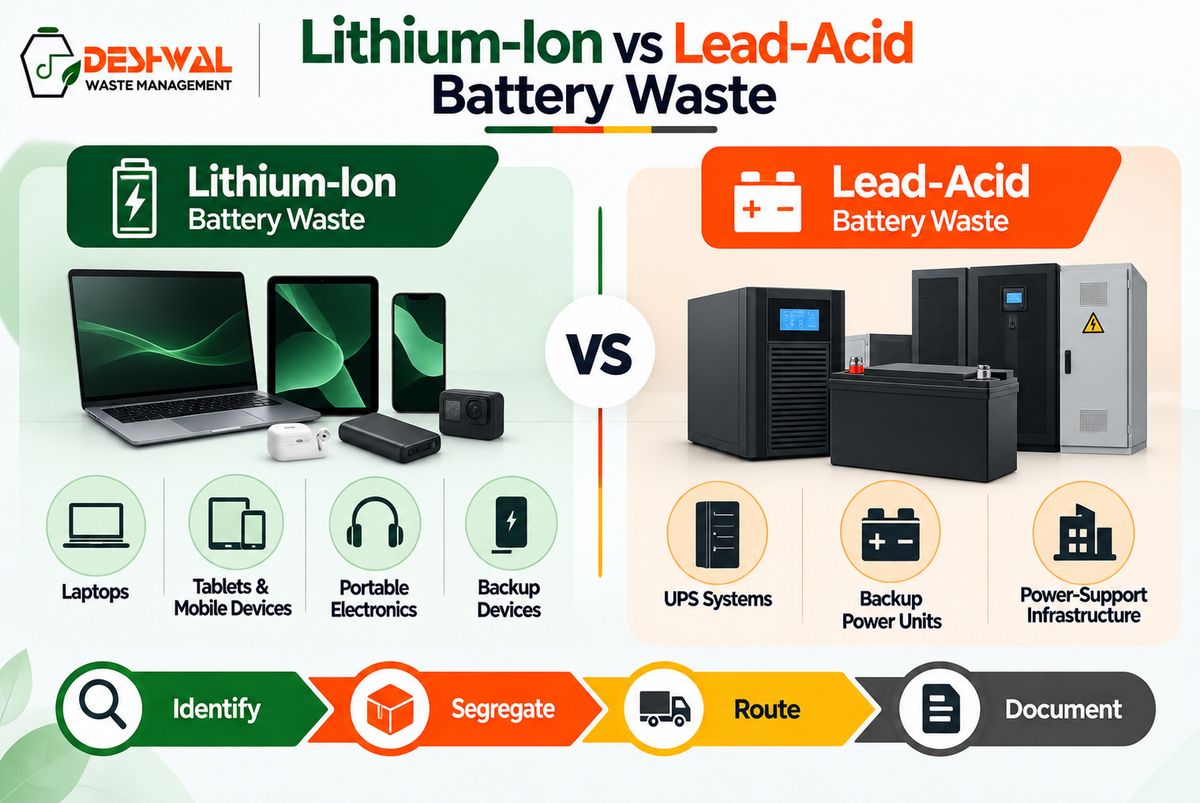
Lithium-ion battery waste may be discovered during device collection, grading, repair, refurbishment coordination or dismantling.
Lead-acid battery waste may be discovered during facilities-led work, UPS removal, infrastructure dismantling or power-system replacement.
Both streams should be identified and routed through documented battery recycling pathways where relevant.
The larger point is simple: battery waste should be classified before it is moved, priced, recycled or closed.
Enterprise risks in unmanaged battery waste
Unmanaged battery waste can create several risks for enterprises.
Safety and handling risk
Battery waste can create safety and handling concerns if it is damaged, stored poorly, mixed incorrectly or moved without planning.
Lithium-ion batteries can be especially sensitive when swollen, punctured, overheated or physically damaged. Lead-acid battery waste also requires careful handling because of its weight, composition and storage requirements.
For enterprises, this means battery waste should not be thrown into mixed scrap or left unmanaged during office closures, UPS replacement or IT refresh projects.
Mixed e-waste routing risk
Battery waste often appears inside a wider e-waste stream.
A retired laptop may contain a lithium-ion battery. A UPS system may contain lead-acid battery waste. A server room dismantling project may include IT assets, cables, racks, storage devices and backup power equipment.
If all material is moved as one mixed lot, the enterprise may lose visibility over battery handling.
This can weaken asset records, recycling records and closure documentation.
Weak documentation risk
For enterprises, the final question is not only whether the battery waste was removed.
The final question is whether the organisation can show how the battery waste was handled.
Useful records may include inventory, pickup documents, receiving records, battery category details, recycling records, EPR-support documents where applicable and closure reporting.
Without these records, battery waste can become a gap in an otherwise controlled ITAD or e-waste recycling project.
How battery waste connects with ITAD and e-waste recycling
Battery waste management often connects directly with ITAD and e-waste recycling.
When an enterprise retires IT assets, it may not immediately think of batteries as a separate stream. The focus may be on laptops, desktops, servers, storage devices, monitors or networking equipment. But many of those assets either contain batteries or are connected to backup power systems.
A proper ITAD process should identify where battery waste is present.
For laptops and portable devices, battery condition may affect repair, refurbishment, resale, recovery or recycling decisions.
For UPS systems and backup power equipment, lead-acid battery waste should be planned as part of the dismantling and reverse-logistics scope.
For data-centre decommissioning, battery waste handling should be aligned with server, storage, rack, cabling and network-equipment removal.
Battery waste also connects with material recovery. IT asset recycling may include PCBs, metals, cables, storage media and plastic fractions recovered from e-waste. Battery waste should be handled as its own stream within that larger recovery and recycling process.
For plastic waste, enterprises should use specific wording: plastic fractions recovered from e-waste. They should not describe general plastic waste or PET recycling unless that scope is separately confirmed.
What enterprises should document during battery waste handling
Documentation is important because battery waste may pass through several hands before final closure.
A strong battery waste file may include the source location, asset category, battery type, estimated quantity, pickup record, custody record, receiving confirmation, recycling record, exception notes and closure report.
For enterprise projects, these records should connect with the wider ITAD or e-waste file wherever possible.
For example, if laptops are collected, the asset inventory should show the devices. If batteries are removed or identified during processing, the closure documentation should reflect how that stream was handled.
If UPS systems are removed during an office closure or data-centre decommissioning project, the battery-related records should connect with the dismantling and reverse-logistics file.
For relevant producer or regulated contexts, battery records may also support EPR-related documentation. CPCB’s Battery Waste Management portal is used for registration of producers, recyclers and refurbishers under the Battery Waste Management Rules, 2022.
For relevant listed entities, battery waste and e-waste records may also support BRSR-related inputs. BRSR should not be described as applicable to every enterprise. SEBI’s BRSR circular is specifically for listed entities.
The stronger outcome is not only that battery waste was removed.
It is that the enterprise can retrieve and review the records later.
Where Deshwal fits in battery waste management
Deshwal’s role is strongest where battery waste management connects with enterprise e-waste, ITAD, dismantling and lifecycle closure.
This includes lithium-ion and lead-acid battery waste handling, reverse logistics, ITAD, data destruction, asset recovery, refurbishment coordination, e-waste recycling and disposal services, plastic fractions recovered from e-waste, EPR support and compliance reporting.
For enterprises, this matters because battery waste is rarely an isolated issue.
IT teams may discover battery waste during device refreshes.
Facilities teams may discover it during UPS replacement or office closure.
Procurement teams may need vendor accountability.
Finance teams may need recovery or disposal reconciliation.
ESG and compliance teams may need documentation for internal review, EPR-related records or BRSR inputs for relevant listed entities.
The goal is not only to clear old batteries from a site.
The goal is to route battery waste correctly and close the record with evidence.
To discuss lithium-ion and lead-acid battery waste handling, contact Deshwal.
FAQs
What is battery waste management?
Battery waste management is the process of identifying, segregating, handling, routing, recycling and documenting used, damaged, end-of-life or discarded batteries.
What types of battery waste do enterprises generate?
Enterprises commonly generate lithium-ion battery waste from laptops and portable devices, and lead-acid battery waste from UPS systems, backup power units and facility power-support infrastructure.
Why is battery waste management important in India?
Battery waste management is important because used batteries can carry safety, handling, recycling and documentation risks. Enterprises need a controlled process to manage battery waste during ITAD, office dismantling, e-waste recycling and data-centre decommissioning projects.
Is UPS battery disposal part of battery waste management?
Yes. UPS battery disposal is a major part of enterprise battery waste management, especially during office closures, UPS replacement, server room changes and data-centre decommissioning projects.
How does battery waste connect with e-waste recycling?
Battery waste often appears inside e-waste streams such as laptops, devices, UPS systems and backup power equipment. It should be identified and routed separately where relevant while still being documented within the wider e-waste recycling file.
What documents should enterprises maintain for battery waste handling?
Enterprises may need inventory records, pickup records, custody records, receiving records, battery category details, recycling records, EPR-support documents where applicable and final closure reports.
Does battery waste management support EPR or BRSR reporting?
It can support EPR-related documentation where applicable. For relevant listed entities, battery waste and e-waste records may also support BRSR-related inputs. These records should be based on documented handling, recycling and closure evidence.